
Knob and Tube Wiring in Wichita: What Every Old Home Owner Should Know
If you own an older home in Wichita, there's a real chance something outdated is hiding behind your walls. Wichita is full of beautiful older neighborhoods, College Hill, Riverside, Delano, where a lot of the homes went up between the early 1900s and the mid century. Those homes have charm for days. They also often have wiring that belongs in a history book.
The big three culprits are knob and tube wiring, aluminum wiring, and old Federal Pacific panels. Let's walk through what each one is, why it matters, and what you can actually do about it. No fear mongering, just straight talk from folks who open up these walls for a living.
What Is Knob and Tube Wiring, Exactly?
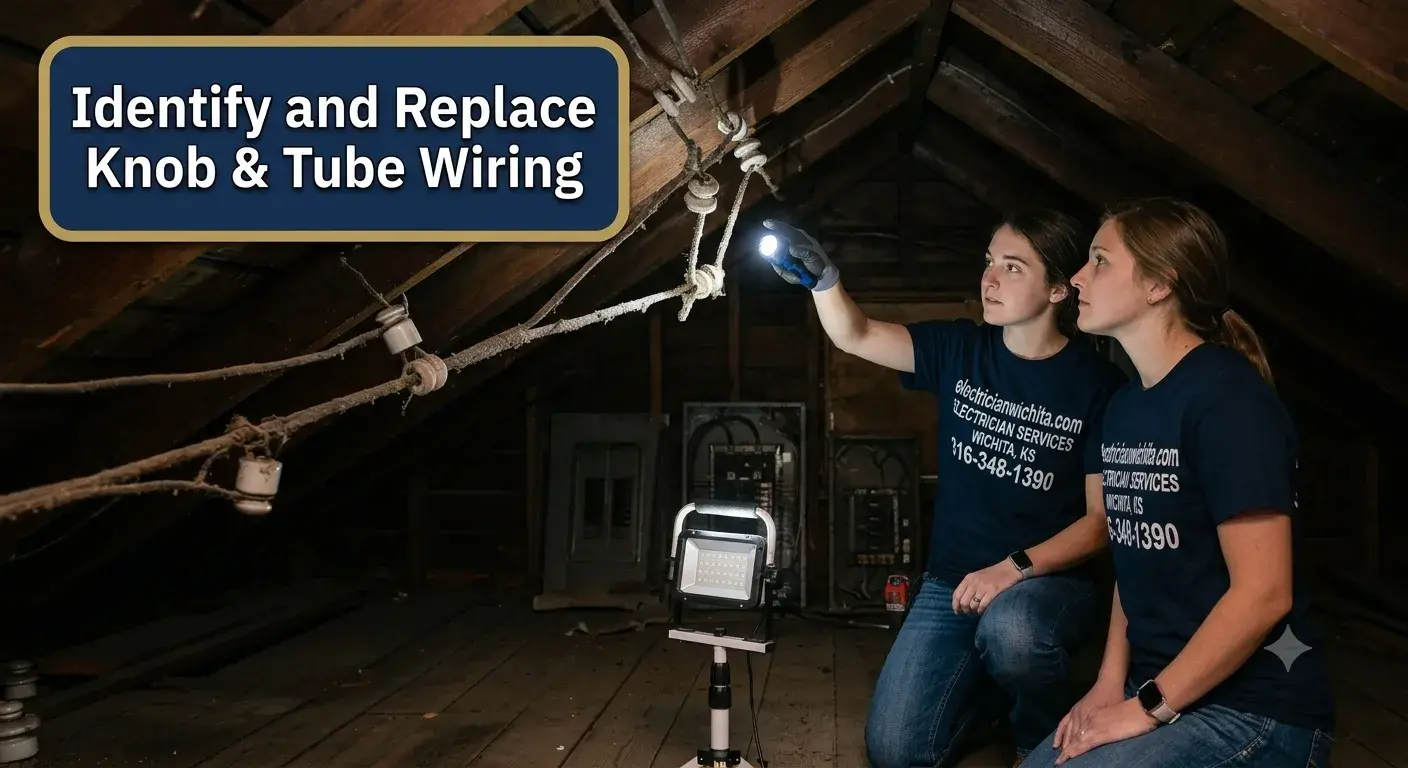
Knob and tube wiring was the standard way to wire a house from around the 1880s through the 1940s. The name comes from the parts. Ceramic knobs hold the wires in place along the framing, and ceramic tubes protect the wire where it passes through wood studs and joists. If you poke around your attic or basement and spot single wires running through little porcelain cylinders, that's it.
Back in its day, it did the job fine. The problem is time, and the way we use power now. A house in 1925 ran a few lights and maybe a radio. Your house runs a fridge, a big TV, computers, a microwave, and central air, all at once. Knob and tube wiring was never built for that kind of load.
Why Knob and Tube Wiring Is a Real Concern
Here's the honest part. Knob and tube wiring isn't automatically about to burn your house down. But it carries some genuine risks that pile up as it ages.
First, there's no ground wire. Modern wiring has a hot, a neutral, and a ground that safely carries away stray electricity. Knob and tube only has the hot and neutral, so it can't ground your appliances or electronics. That means every outlet is an old two prong type, and shock risk goes up.
Second, the insulation gets old and brittle. The rubber and cloth coating on these wires dries out, cracks, and flakes off over the decades, which can leave live copper exposed inside your walls. That's a fire and shock hazard nobody can see.
Third, and this is the big one, insulation contact. Knob and tube was designed to sit in open air so heat could escape. When someone later blows attic insulation over it, the heat gets trapped, and that's a serious fire risk. The National Electrical Code actually forbids burying knob and tube in insulation for this reason.
And finally, people mess with it. Over the years, owners overload these old circuits or swap fuses for bigger ones to stop them blowing, which just lets more current heat up wiring that can't handle it. Electrical fires cause over a billion dollars in property damage a year in this country, and home wiring is behind a big share of them. That's why we take knob and tube wiring seriously.
The Insurance Problem You Might Not See Coming
Here's a headache a lot of Wichita homeowners run into without warning. Insurance companies do not like knob and tube wiring.
Many insurers will flat out refuse to write a policy on a home that still has active knob and tube. The ones that will cover it often charge 50 to 100 percent more per year, or only offer a stripped down policy that pays out less after a claim. Some will insure you but require you to replace the old wiring within 30 days of buying the home. Miss that window, and they can cancel your coverage and even notify your lender, which puts your mortgage at risk.
So even if your knob and tube wiring is working fine today, it can quietly cost you money and stress every single year at renewal time. That alone pushes a lot of owners to just get it replaced.
It's Not Just Knob and Tube: Aluminum Wiring and Federal Pacific Panels
While we're talking old wiring, two other things show up in Wichita homes, and they deserve a mention.
Aluminum wiring became common in the 1960s and 70s when copper got expensive. The trouble is aluminum expands and contracts more than copper, so connections at outlets and switches loosen over time, then heat up. Loose, hot connections behind a wall are how fires start. Insurers treat aluminum wiring as a risk too, though usually a bit less strictly than knob and tube. The good news is it can often be fixed by properly pigtailing copper onto the connections rather than a full replacement.
Then there are Federal Pacific panels, sold widely for decades. The issue is their breakers have a known history of failing to trip during an overload, which is the one moment you need them to work. If your panel says Federal Pacific or Stab Lok, it's worth having checked, because no repair makes a faulty one truly safe. Replacement is the fix.
None of this means your old home is a lost cause. It just means these are things a smart owner gets ahead of.
What You Can Actually Do About It
Alright, so you think you've got knob and tube wiring, or one of its cousins. Here's the sensible path.
Start with an inspection. A licensed electrician can look through your accessible spaces, tell you how much old wiring you actually have, and how it's holding up. Sometimes it's the whole house, sometimes just a section. You can't make a good decision without knowing the scope.
For a real fix, a whole house rewire replaces the old runs with modern grounded copper. Yes, it's an investment, but it solves the safety, insurance, and resale problems all at once. In some cases, a licensed electrician can add GFCI protection to ungrounded outlets as a code approved stopgap for certain spots, though it doesn't add a true ground.
Whatever you do, don't try to alter knob and tube yourself, and don't let a handyman tie new wiring into it, which is exactly the kind of shortcut that fails inspection later. This is licensed electrician work, permitted through MABCD and done to code.
The Bottom Line for Wichita Homeowners
Owning an older Wichita home is a joy, brick streets, big porches, real character. Just know what's behind the walls. If your home has knob and tube wiring, aluminum wiring, or a Federal Pacific panel, get it inspected, understand your insurance situation, and make a plan. Handling it makes your home safer, cheaper to insure, and easier to sell down the road.
If you're not sure what you've got, the smartest first step is a straight, no pressure inspection from a local licensed electrician who knows these old Wichita homes.